
America 275
It’s up to us

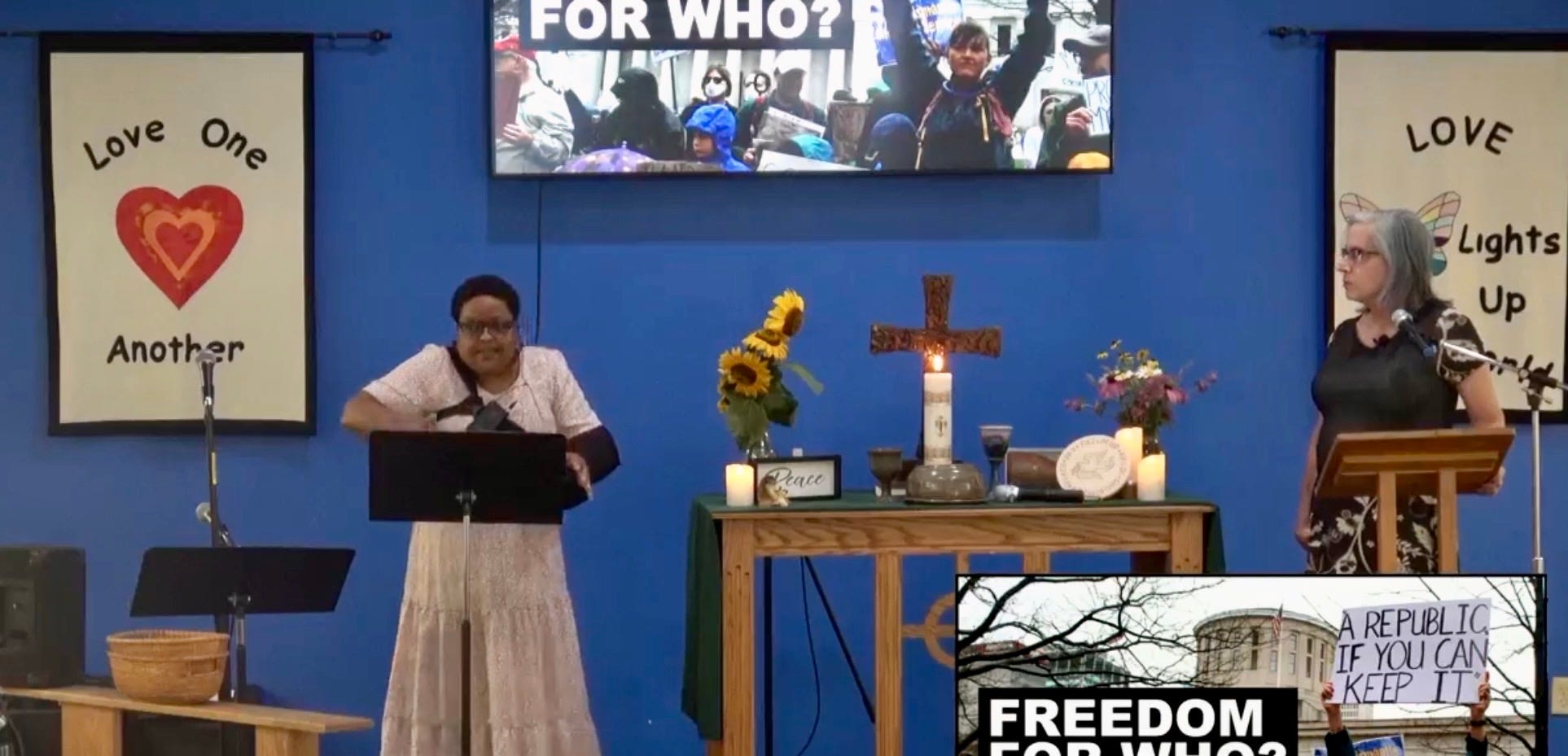
This post is taken from a sermon given yesterday by Paisha Thomas and I at Church for All People.
The dust has cleared from our nation celebrating its 250th anniversary. We remembered the Declaration of Independence and its promise that “all” are created equal and endowed with the rights to life, liberty, and the pursuit of happiness. But anniversaries are not only about remembering where we have been. They are also about deciding where we are going.
For much of my life, I believed our country was slowly growing into those words. The journey was uneven, but the circle of “all” kept widening. Women claimed their voices. Black Americans continued the long struggle for civil rights. Indigenous peoples demanded recognition and justice. LGBTQ+ people stepped into the light, insisting that our lives and loves belonged within America’s promise.
Today that hope feels more fragile.
We are witnessing the rise of Christian nationalism, a movement that baptizes white, male, colonial power as though it were the will of God. It wraps prejudice in religious language and mistakes domination for discipleship. Rather than expanding the meaning of “all,” it seeks to shrink it.
I recently heard someone describe this moment as the “last gasp of the Confederacy.” I wish I believed that. Instead, I fear we are watching an attempted relaunch. Not simply nostalgia for the past, but an effort to rebuild old systems of exclusion with new branding and new strategies.
Businesses relaunch themselves when they fear becoming irrelevant. Empires do something similar. Historians often note that empires have lifespans of roughly 220 to 250 years before they either transform or decline. The question before America is not whether we will change. The question is what kind of relaunch we will choose.
One path seeks greater concentration of power, stronger hierarchies, and fewer people counted among “We the People.”
Jesus offers another.
His vision was never about preserving institutions or protecting empires. It was about building the kindom of God, a community where the vulnerable are welcomed, the oppressed are liberated, neighbors care for one another, and everyone has enough.
That future begins much closer to home than Washington. During worship yesterday, we asked our congregation one simple question: What can we do?
The answers centered on building a movement of the beloved community.
The South African philosophy of Ubuntu teaches, “My humanity is bound up in yours.” Archbishop Desmond Tutu drew upon Ubuntu to help South Africa move beyond apartheid, reminding the world that none of us can flourish while others are excluded.
That wisdom echoes Paul’s words in Romans 8. We are “more than conquerors” not because any one person is powerful enough to defeat injustice alone, but because nothing—not hatred, fear, oppression, nor death itself—can separate us from the love of God. That love binds us together and gives us courage to keep building.
America’s 250th birthday should not be the finish line.
Let it be the beginning.
Imagine what our nation could become by its 275th anniversary if churches chose love over nationalism, communities chose solidarity over division, and we measured our success by how well the most vulnerable among us were able to flourish.
Twenty-five years is enough time to transform a neighborhood. It is enough time to transform a church. It is enough time to transform a nation.
The work begins today.