
Remembering the forgotten on Memorial Day

On Memorial Day, we remember those who died in military service—those whose names are know and those who go unknown.
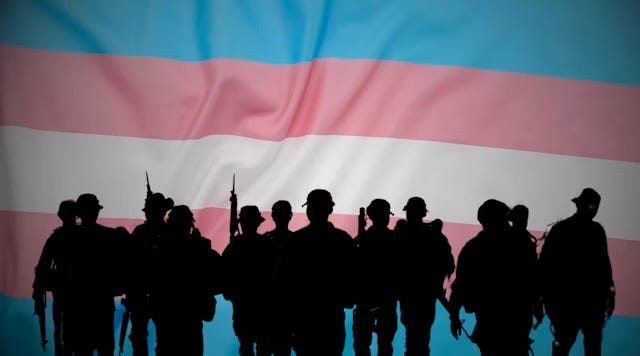
For most of American history, transgender people have not been able to safely serve in the military as themselves. People like Albert Cashier in the Civil War and Alan Hart in World War I lived their lives as men and served in combat while hiding the fact that they had transitioned. People like Monica Helms served in the Navy during the Vietnam War for a country that denied her humanity, but she went on to create the transgender flag.
When transgender people died in combat, they were buried under names and identities that were never truly theirs. That sacrifice is the cost of erasure. As a result, Memorial Day is not only a day of remembrance, but also a day of lament.
We lament the lives hidden.
We lament the stories untold.
We lament the people who gave everything for a nation that made authenticity dangerous.
Scripture tells us in Psalm 139 that God knows us completely, that even before a word is on our tongues, God knows it altogether. Before any government record, before any military file, before any obituary, God knows our names.
There are veterans whose true selves never appeared on discharge papers, but whose identities are still sacred.
There are transgender people who died believing they had to choose between service and authenticity, but who were never abandoned by God.
On Memorial Day, the church is called to remember not only the celebrated dead, but also the erased dead. The ones hidden between the lines of history. The unnamed saints. The invisible sacrifices.
Because resurrection is, in part, God’s refusal to let the erased stay buried in silence.
And perhaps one of the holiest acts we can offer this Memorial Day is simply to tell the truth that transgender people have always been here.
Always served.
Always sacrificed.
Always been beloved by God.
Excellent!